
Corporate giving is entering a new phase. For the first time, a generation of workers is expecting employers to provide more than a salary. They want purpose, transparency and meaningful impact. The Gen Z workforce is driving this shift. Their expectations around workplace giving, workplace philanthropy and employee volunteering are reshaping corporate social responsibility.
This change is not based on assumptions. It is supported by real evidence. Deloitte’s 2025 global survey of more than 23,000 Gen Z and Millennial workers found that they are looking for the right balance of money, meaning and well-being in their careers.
IBM research shows similar patterns. Early professionals, many from Gen Z, increasingly select employers that demonstrate strong sustainability credentials.
For Gen Z, workplace giving programs signal whether a company is aligned with their values. This makes it an essential part of modern talent strategy.
A New Set of Expectations
Gen Z is the first truly digital native generation. They learned to problem-solve through global issues and social movements. Their sense of responsibility is shaped by economic instability, climate anxiety and the constant visibility of social challenges.
The Deloitte survey noted that only a small percentage of Gen Z respondents aim to climb to senior leadership. Instead, they prioritise meaningful work and positive social impact. IBM’s findings reinforce this, showing that Gen Z employees value sustainability performance over branding when evaluating employers.
These insights explain why workplace giving is now seen as a cultural indicator. For younger employees, a company’s ability to support causes, provide transparent giving options and enable employee volunteering has a real influence on satisfaction and loyalty.
The Role of Workplace Giving and Workplace Philanthropy
Workplace giving refers to initiatives that allow employees to donate, volunteer or participate in social impact programs through their employer. Workplace philanthropy expands this to include matching contributions, campaigns and corporate commitments to social causes.
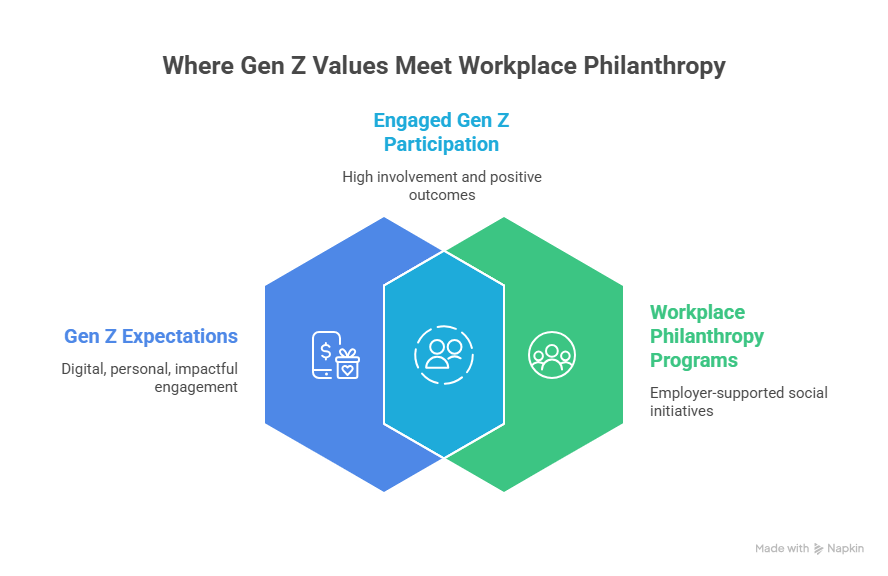
For the Gen Z workforce, these programs matter deeply. They expect opportunities to support causes they personally care about, and they want those opportunities to be integrated into company culture. They also expect digital accessibility, smooth user experience and clear evidence of outcomes.
Companies that adapt to this mindset consistently see stronger participation in employee volunteering and higher engagement in giving programs.
Digital Platforms Are No Longer Optional
Because Gen Z is fully fluent in digital experiences, they expect workplace giving programs to reflect the same standard. A modern CSR platform should give them the ability to select causes, track donations, log volunteering hours and view impact updates from their mobile devices.
A digital-first approach is now essential. These platforms reduce administrative burden, eliminate fragmented communication and help companies consolidate data that was once scattered across spreadsheets or email chains.
For the Gen Z workforce, seamless digital tools are the difference between passive awareness and active engagement.
Personal Choice and Cause Diversity
Traditional CSR programs often focused on a narrow set of causes. Gen Z does the opposite. They tend to support multiple areas including mental health, climate action, educational access, social justice and LGBTQ+ advocacy. They do not want to be restricted to a single theme.
Companies that offer broad cause options and personalised recommendations attract higher participation. Gen Z employees are also more likely to advocate for programs that reflect their personal values.
The structure of workplace giving needs to respect this diversity. It should allow employees to explore different opportunities, whether they relate to local community initiatives or global campaigns.
Transparency Strengthens Trust
One of the defining traits of the Gen Z workforce is a strong preference for authenticity. They expect companies to be transparent, honest and accountable. This expectation directly influences their participation in workplace philanthropy.
Gen Z wants to see where funds are going, what impact is being created and how partner organisations are performing. They look for clear reports, detailed storytelling and evidence supported by real data.
Transparency also improves the effectiveness of employee volunteering programs. Teams feel more motivated when they understand the outcome of their effort and see the direct influence of their work.
How Companies Can Engage Gen Z Effectively
To align workplace giving with Gen Z expectations, companies need to focus on several strategic actions:
Mobile accessibility
Employees should be able to access giving programs, track volunteering and view updates from their phone.
Flexible volunteering options
Virtual volunteering, short-term opportunities and skill-based assignments work well for hybrid teams.
Cause variety
Employees should be given access to a wide range of social issues rather than a single corporate agenda.
Transparent impact tracking
Companies should use dashboards, reports and NGO updates to show progress and build trust.
Leadership involvement
Visible support from company leaders ensures that workplace giving is embedded into workplace culture rather than a one-time campaign.
These changes create a more human and connected approach to social impact.
Why This Matters for Companies
Employee volunteering and workplace giving programs deliver measurable benefits for organisations. They contribute to stronger culture, improved morale, higher retention and more meaningful bonds between employees and leadership.
Deloitte’s 2025 survey states that meaningful work and trust-driven culture play a central role in long-term retention for the Gen Z workforce. When companies align their CSR approach with these expectations, they create workplaces where younger employees feel valued and committed.
How Workplace Giving Will Evolve Next
Technology will continue to reshape workplace giving. Artificial intelligence will improve personalisation, recommending causes based on individual interests. Analytics will offer leadership real insight into participation patterns and social return on investment. Virtual volunteering will expand opportunities for remote teams. Unified reporting will help companies merge CSR and ESG data for stronger sustainability reporting.
As the Gen Z workforce grows, workplace giving will shift from a support function to a strategic pillar of culture and employer branding.
Companies that embrace this change will create stronger loyalty, deeper engagement and more meaningful community impact.
Conclusion
The Gen Z workforce is driving a new era of workplace giving. Their expectations are reshaping how companies think about social impact, purpose and employee engagement. They want digital access, clear transparency, diverse cause options and real evidence of results.
Workplace giving is no longer a side activity. It is becoming a strategic requirement for companies that want to attract and retain younger talent while contributing to real social progress.
Companies that adapt will earn trust, build stronger teams and influence the future of purpose-driven work.